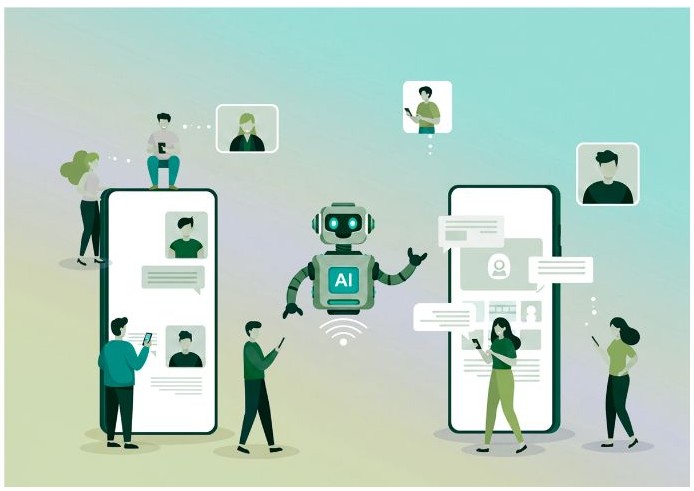
As senior executives in the Employment Services Industry, you operate at the intersection of technology, human capital, and economic trends. The rise of artificial intelligence (AI) is no longer a distant prophecy; it’s a transformative force reshaping the labour market in real time. The question isn’t whether AI will impact jobs; it’s how profoundly it will alter them and what you, as leaders, can do to navigate this shift. Here we will discuss the implications of AI on employment, its specific impact on your industry, and actionable strategies to stay ahead of the curve.
The AI Revolution: A Double-Edged Sword
AI’s capabilities are expanding at an unprecedented pace. From automating routine tasks to generating insights from vast datasets, AI is already embedded in industries ranging from manufacturing to finance. In the Employment Services Industry, AI is streamlining Career Advisor workflows, automating and personalising skills coaching for clients, and automating screening and assessment. Tools like AI-driven applicant tracking systems (ATS), predictive analytics for talent acquisition, and chatbots for candidate engagement are becoming standard for most organisations that are hiring your clients.
However, the same technology that empowers your operations and those of hiring organisations, also raises concerns. A 2023 report from the World Economic Forum estimated that 23% of global jobs could be disrupted by automation and AI by 2027, with administrative and clerical roles among the most vulnerable. Yet, the same report projected that AI would create 69 million new jobs, particularly in tech-driven and analytical fields. This duality, disruption and opportunity, defines the AI era.
For the Employment Services Industry, the stakes are high. You’re not just adapting to AI within your organisations; you’re guiding clients (both employers and job seekers) through a labour market where AI is redefining roles, skills, and expectations. The question “Is AI coming for my job?” isn’t just personal; it’s a concern you hear from clients and corporate partners daily.
AI doesn’t just streamline, it disrupts. Roles like administrative recruiters, content creators, data entry specialists, and even some mid-level management functions face obsolescence. Meanwhile, demand is surging for technical AI specialists, data analysts, and roles requiring emotional intelligence and strategic thinking; skills AI can’t fully replicate.
The Broader Labor Market: What Your Clients Face
Your clients are grappling with AI’s impact too. For employers, AI offers cost savings and efficiency but introduces challenges like reskilling workforces and managing employee anxiety about automation. A 2024 McKinsey study found that 60% of current jobs involve tasks that could be at least 30% automated by 2030. Industries like retail, manufacturing, and customer service are particularly vulnerable. Ironically, the consultants themselves, McKinsey, just announced 10% of their own workforce is being replaced by an Internal LLM named “Lilli’!
Job seekers, meanwhile, face a polarised market. Low-skill, repetitive jobs are disappearing, while high-skill roles in AI development, cybersecurity, and data science are booming. This polarisation amplifies inequality, as workers without access to upskilling struggle to transition. Your role as employment service providers is more critical than ever, to bridge this gap, helping clients adapt to a market where adaptability is the new currency.
What Can You Do About It?
As Employment Services executives, your responsibility is described as being twofold: future-proof your organisations and empower your clients to navigate the AI-driven landscape. Here are five actionable strategies to consider:
- Embrace AI as a Partner, Not a Threat.
Integrate AI tools into your operations to enhance efficiency and client value. By positioning AI as an enabler, you maintain a competitive edge. Audit your current tech stack. Identify areas where AI can reduce costs or improve outcomes for your clients. - Upskill Your Employment Services Workforce
Your Career Advisors need skills that complement AI, not compete with it. Invest in training programs focused on AI literacy, AI tool management, and soft skills like emotional intelligence, which remain uniquely human. Partner with e-learning platforms to create tailored upskilling programs. Offer incentives for Career Advisors who complete AI-related certifications. - Support Job Seekers Through Transition
Job seekers need guidance to navigate AI-driven hiring processes and identify roles with staying power. Enhance your career coaching services with AI tools that provide personalised job-matching, skills coaching, and resume optimisation. Simultaneously, emphasize human-centric support such as: empathy, negotiation skills, and career planning; that AI can’t replicate. Consider launching an AI-enhanced career portal that combines automated job-matching with AI powered personalised skills coaching. This could be marketed to job seekers as a hybrid solution for the modern labour market. - Stay Ahead of Policy and Ethical Trends
AI raises ethical questions: bias in algorithms, privacy concerns, and equitable access to opportunities. As industry leaders, advocate for responsible AI adoption. Stay informed about regulations like the EU’s AI Act or proposed U.S. guidelines on workplace AI. Positioning your Employment Services organisation as an ethical AI leader, builds trust with your jobseeker clients and hiring organisations. Consider forming an AI ethics task force within your organisation. Publish thought leadership on responsible AI use to establish your firm as a trusted voice. - The Human Edge in an AI World
AI may automate tasks, but it also amplifies the value of human skills like creativity, empathy, and strategic vision. As Employment Service leaders, your ability to blend AI’s efficiency with human insight is your greatest asset. Encourage your teams to view AI as a tool that frees them to focus on what matters: building relationships, solving complex problems, and shaping careers.
For your clients, the message is clear: AI isn’t “coming for” jobs, it’s transforming them. Those who adapt by upskilling, embracing lifelong learning, and leveraging AI’s capabilities will thrive. Employment Services teams can help guide them through this transition, offering solutions that balance technology and humanity.
Lead the Change, the Employment Services Industry has never been a more critical service than it is today, especially as we advance into this new AI economy.
For more information about Getmee AI, visit https://getmee.ai.